
When we began developing Curiyo.io, we weren’t looking for a problem that technology could solve. We were looking for a better way to address a challenge we had encountered firsthand.
Researching personal belongings, understanding their potential value, and keeping track of information could be surprisingly complicated. While resources existed, they were often scattered across marketplaces, historical archives, and specialty websites.
We saw an opportunity to bring that information together and make the experience more approachable.
Starting with the problem
Our earliest conversations focused on a simple question: What would make researching and organizing personal belongings easier?
We didn’t think the answer was necessarily more information. It was making existing information easier to find, understand, and use.
We envisioned a tool that could begin with something as simple as a photograph, helping someone explore an object’s history, potential value, and related information without needing to know exactly where to start.
That idea became the foundation for Curiyo.io.

Making information meaningful
An important influence on our approach has been Rebecca’s work in financial education.
One of the lessons from that experience is that access to information alone doesn’t always lead to understanding. Context matters, especially when people are using information to make decisions.
We saw a similar need when exploring personal belongings.
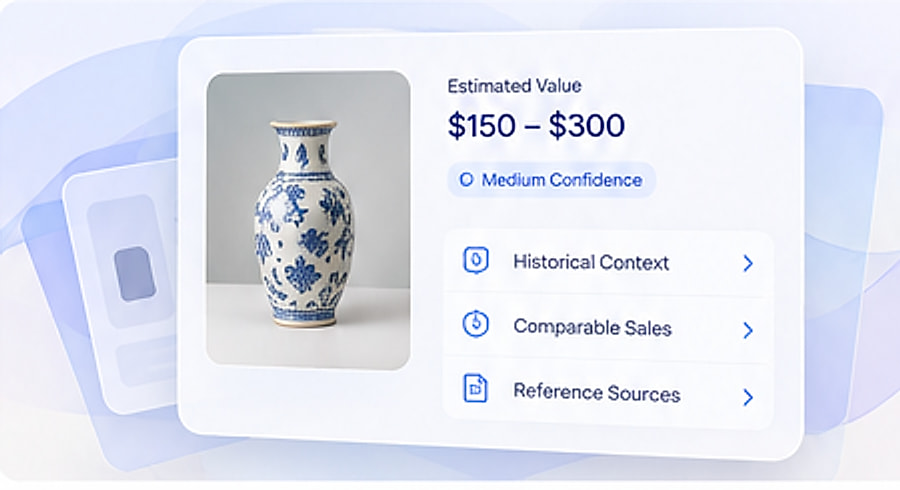
An asking price isn’t necessarily a selling price. An appraisal may serve a different purpose from a market estimate. And an object’s potential value can depend on factors such as condition, rarity, and demand.
We wanted Curiyo.io to help people explore these distinctions by bringing together market information, historical context, comparable sales, and reference sources.
Our goal isn’t simply to present an estimated value. It’s to make the information behind it more accessible and understandable.
From discovery to organization
As we developed the concept, we began thinking beyond individual objects.
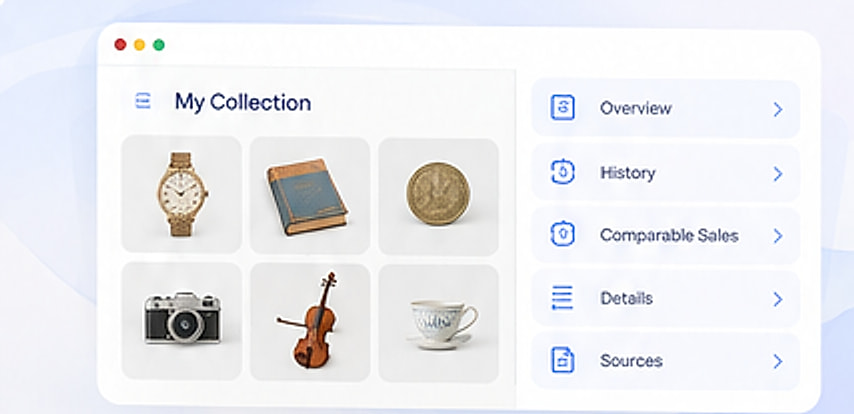
Learning something new about a belonging can be interesting. Being able to document that discovery and keep the information organized can make it useful over time.
We designed Curiyo.io to help people build an inventory as they explore what they own, bringing together object details, estimated values, and personal history in one place.
Whether someone is managing a collection, preparing for a move, helping a family member, or simply getting organized, having a clearer record of their belongings can provide a valuable starting point.
For us, discovery and organization naturally go hand in hand.
Keeping people at the center
Throughout the development process, we’ve returned to a guiding question: Does this make the experience easier for the person using it?
That question shapes how we think about the information we present, the features we prioritize, and the way people interact with the product.
We also recognize that technology doesn’t need to solve every part of a problem.
Sometimes its most useful role is to bring information together, simplify a task, or help someone take the next step with greater clarity.
We want Curiyo.io to be a practical tool that supports people, rather than technology for its own sake.
Looking beyond the product
Building Curiyo.io has also influenced how we think about Wealth Nexus.
The experience reinforced our interest in creating solutions that begin with real needs and make information more useful.
Financial literacy, organization, and informed decision-making may seem like separate subjects, but they share an important principle: people benefit when they can understand the information in front of them and use it to make decisions.
Curiyo.io is our first expression of that approach.
As we continue developing the product and exploring what comes next, our focus remains on creating thoughtful, practical solutions that help people find clarity and get organized.
What Matters.

